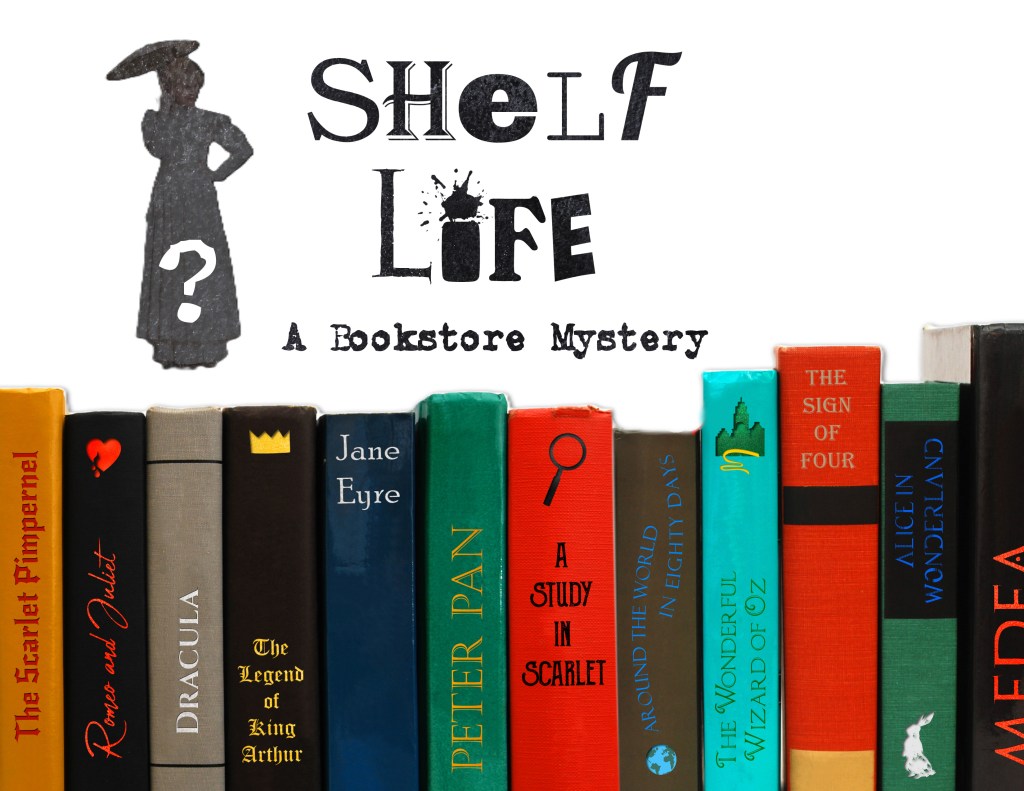
It’s no secret that literary characters are full of…well…character. But translating these characters from page to stage is an entirely different matter. Besides, these are no ordinary adventures our heroes undertake. Once you step out from the security on your home book and meet other fictional characters, new alliances, friendships, and rivalries are born. How do these fictional fellows handle the changing times? The students working on Shelf Life had to extract from these characters new stories to tell, and below we let the kids talk about how they view these paper men and women.
FULL OF CHARACTER: The Making of Shelf Life (Part 1)

Named by proclamation of King Arthur until her real name is uncovered, Instert Name Here, shortened to INH (pronounced Ina), is a forgotten literary character whose main book is left woefully under-read. As such, she’s forgotten who she is. She’s generally rather spacey, lost, confused, struggling to recall details in the beginning of the show. But as the play progresses, she starts developing a stronger backbone and personality of wit, determination, cleverness, and foresight as she remembers more about her life. This is Kaylee Erb’s debut Master Mystery Production, and this is what she has to say about Insert Name Here:
“INH is a very confused character, as she doesn’t know her name or anything about herself at all. She tends to try to understand the people around her, but doesn’t really get them. She doesn’t really know anyone, and therefore doesn’t really have strong opinions about them. However, as the story continues, she starts to dislike Juliet, as well as be grateful for Mina and Fogg’s help. In the beginning, she usually stumbles around confused, lost and unsure about what she’s supposed to be doing. As the story continues, she becomes more confident in what she says and does.”

The Once and Future King of Britain. King Arthur is a legendary figure of medieval literature dealing with the Matter of Britain. He hasn’t quite grasped that he’s more legend than fact and thus views himself as the rightful ruler over the bookstore. The other characters just let him go on with this fancy, as he doesn’t bother them. With his grand, kingly demeanor, he tends to favor grand, sweeping proclamations. He’s the one who rechristens INH by royal decree. He is closest to Sherlock Holmes. This is Wyatt Pate’s debut Master Mystery Production, and here’s what he thinks of King Arthur:
“As a man who never really knows if he’s fiction or fact, he continues on with vigor! His fellow book friends think he is a bit crazy but still give him the proper royal treatment. You can bet he will give all his kingliness to help find out mysterious lady’s identity!”

Sherlock Holmes is the star of his own series of adventures written by Arthur Conan Doyle. Intelligent, hyper-focused, clever, proud of his accomplishments, a bit conceited when it comes to his own brains and ability, and a tad dismissive of others, Holmes is the only one who can withstand King Athur’s royal ramblings and proclamations because he’s not really paying attention to anyone else anyway. Holmes views the discovery of INH’s identity to be a simple challenge—yet another feather in his deerstalker cap. But he relishes in the chance to flex his brain powers again. This is Reegan Hall’s debut Master Mystery Production, and she provides clues into how she created the famous detective:
“The main person he prefers to hang out with is King Arthur, and though they are friends, Sherlock gets very tired by Arthur’s grand proclamations and general over-the-top demeanor. When trying to figure out who INH is, he is glad to be able to exercise his logic skills on something new. He’s the smartest one in the bookstore and he knoes it; he isn’t exactly modest either, though he issn’t unbearably arrogant. He has a decent amount of sarcasm although he’s generally pretty serious and rarely shows emotion (except exasperation in Arthur’s case). Because of these traits, he mostly ignores the other characters and tries to stay out of arguments. However, he is very observant and rarely misses or forgets details. When he feels the need to add something, he will join in a conversation for a bit, but he often talks to himself while he thinks.”

The other half of William Shakespeare’s Romeo and Juliet, Juliet Capulet is the second oldest character in the group behind King Arthur, which means she has lots of experience in how the world works and has seen it change over centuries. As such, she’s a lot sassier than her written version, because she has experienced her story millions of times. She is always happy to get away from Romeo for the night and just be herself. Although a bit jaded and world-weary, she’s the de facto leader of the rest of the characters who turn to her for advice and guidance. Her closest friend is Jane Eyre. This is Olivia Erb’s debut Master Mystery Production, and she wrote down her thoughts on Juliet:
“When finding her personality, I first looked at the character sheet and found out that she was very sassy and had a short temper. She yells a lot. I moved from that and decided that she hated a lot of characters. She hated Fogg, Mina, and INH, but she was best friends with Jane, though she can still get mad at her.”

The title character of her own novel by Charlotte Brontë, Jane Eyre is one of the few characters to have her entire adolescence captured in a book—from ages ten to twenty. She often jokes “my whole life is an open book.” Resourceful, intelligent, and with high principles, Jane has taken on a kind of motherly or guardian-like role with the younger characters, in part because of her book life as a governess—a kind of homeschool tutor—at Thornfield Hall. She’s also the disciplinarian of the group whenever the characters get out of line. While King Arthur thinks he’s in charge, Juliet and Jane run the operation. She bonds with Juliet over their not-so-happy childhoods. She also has friendship with Mina as they both grew up as orphans. This is Journey Curran’s debut Master Mystery Production, and she presents her views on what makes Jane Eyre tick:
“When I read through Janes Erye’s lines for the first time, I truly felt that these lines were hand-written for me. I developed her character by making her a loving mother figure and friend who is has lived a long life and has seen a lot of things. She doesn’t like to be sassed or argued with so I made her stern with a stubborn streak. Honestly, I didn’t have to change much of my personality to match this loving amazing character.”
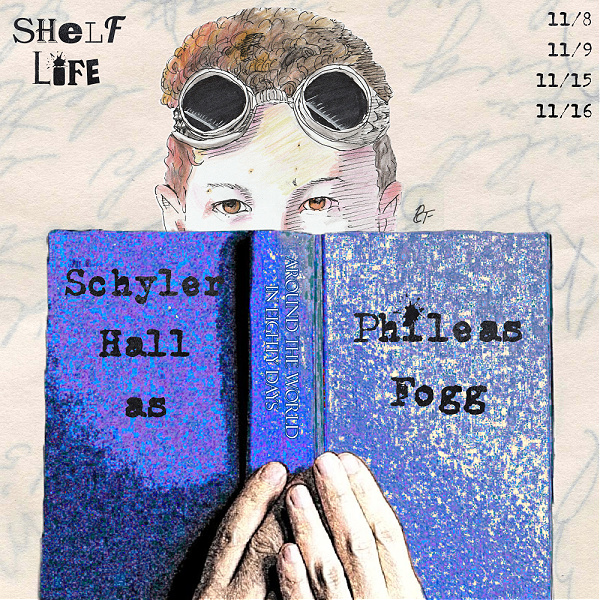
Star of Around the World in Eighty Days by Jules Verne. Punctual and mechanically-minded, Phileas Fogg boasts the most perfect mental clock and sense of timing out of everyone in fiction. As such, he’s the group’s timekeeper and lets them know when they are off the clock and when they have to return to their books. He is fussy and fastidious with his routines. Although he’s precise with numbers, he’s vague on names. His intense precision led him to travel around the entire world on a bet, so he’s by far the most traveled character of them all. The others often use him as a window to the outer world, despite his knowledge stopping at Victorian times. He’s calm, centered, and not prone to mood swings, but he possesses a dry, sharp sense of humor. He is closest to Mina as they share a certain dry outlook on the world. This is Schyler Hall’s debut Master Mystery Production, and he writes his thoughts on performing as the global traveler:
“My character is Phileas Fogg. I’m the timekeeper in the play. I think I do it well, although I don’t think it’s a very hard character to play. My job is mostly keep the time, and it has helped me to act like I’m always thinking about something. Fogg is punctual and has an obsession with time. I also do, so I think I do these things well.”

Mina Harker is a main character of Bram Stoker’s Dracula. Full name Wilhelmina, but she has grown weary of that and prefers the shorter moniker. Mina is the one who actually compiled all the documents that created the book Dracula. Her experience with the vampire left her with lingering powers when he tried to transform her. She has a weak telepathic connection with him that mostly annoys her like a headache. Intelligent and direct, Mina is the one who takes the most direct action to help INH by questioning her alongside Phileas Fogg. She and Phileas have a contented friendship as they both understand each other’s dry humor. Mina is the most sarcastic of all the characters. This is Callie Bennett’s debut Master Mystery Production, and she offers us a glimpse into what sees in Mina Harker:
“Mina Harker is a part vampire from Bram Stoker’s Dracula. What I personally like about her is how dry and sarcastic she can be. She kinda reminds me of myself in that aspect. I view her as someone who likes to cause chaos for no reason and just generally give everyone a hard time. When it comes to helping INH, I feel like she mostly did it as an “oooh something that might cause problems and chaos,” but I also think that she felt bad for INH. What I did to help myself prepare for my role is that I read teh Junior Classics’ Dracula.”

Protagonist of The Wonderful Wizard of Oz by L. Frank Baum, Dorothy Gale is a young girl thrust by chance and tornado into a marvelous adventure in Oz. She’s quite used to coming across strange characters in the everyday run of her experiences, so INH’s presence and predicament sounds like a normal day to her. Friendly, outgoing, curious, and imaginative, Dorothy is perhaps the most welcoming to INH and wants to help her be happy, even if she never recovers her memories. This is Daphne Berry’s debut Master Mystery Production, and she shares her views on Dorothy:
“Dorothy Gale is very curious, friendly, adventurous, and imaginative. Being the bridge between her friends Peter Pan and Alice’s personalities, she gets along well with both of them. Despite being friends with Alice, she is closest with Peter due to their similarity in age and experience. Sometimes hanging out with Alice helps Dorothy catch a break from all of Peter’s antics. Dorothy, being the kind, friendly girl she is, naturally has a good relationship with most other characters. The one character she isn’t too fond of is Mina, because Mina seems an awful lot like the Wicked Witch of the West. Because of Dorothy being so outgoing and adventurous, it’s in her nature to help any new friends in need such as INH.”

The lead of J. M. Barrie’s Peter Pan, both the play and the novel. The Boy Who Never Grew Up. Leader of the Lost Boys in Neverland. Enemy of Captain Hook. Brave, impetuous, child-like, silly, carefree, and playful, Peter isn’t really concerned with INH or her plight, as he’d much rather go on adventures in the store. He often gets into mischief and likes to tease or trick serious characters like King Arthur or Sherlock Holmes. In general, he’s harmless, but he can get on people’s nerves from time to time with his antics. Although he often brags about the fact he won’t ever grow up, Peter does hold a private wish to know what it would be like to grow up just once in his life. His best friends are Dorothy and Alice, who remind him of Wendy. This is Vincent Allen’s debut Master Mystery Production, and he gives us his ideas about his character:
“I am Vincent Allen, and I’m playing Peter Pan. I like this character, because he is funny and makes jokes about people, like what I sometimes fo with my friends. I like to work with Daniel and Devanne, because they give me a chance to let loose. I usually am quiet and calm, but here I got to have fun and express myself better. I like to work on having less restraint, so I can be better in character. I’ve noticed that our characters rub off on the people playing them. I would want to do this again.”
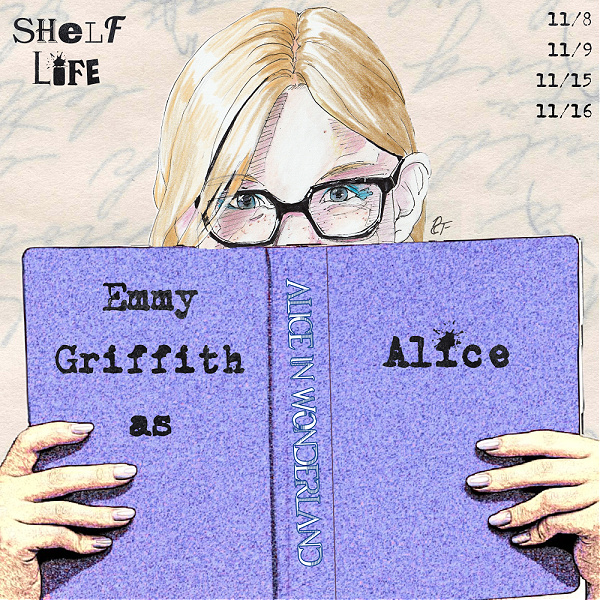
Lead from Alice’s Adventures in Wonderland and Alice Through the Looking Glass by Lewis Carrol, Alice is a young English girl whisked to Wonderland through both rabbit holes and looking glasses. With faint remarks of “curiouser and curiouser,” Alice had difficulty ascribing any sort of sanity or structure to Wonderland. But now as a veteran character, weirdness hardly affects her. It’s all par for the course. She longs for normalcy, though, in this crazy world, and she often just enjoys playing regular games with Peter and Dorothy to feel like a normal kid again. This is Emmy Griffith’s debut Master Mystery Production, and these are her thoughts on Alice:
“Alice, from the classic fantasy story, Alice’s Adventures in Wonderland, is a very interesting character. In her story, she runs into many adventures, each one stranger than the last. But in her off hours, she likes to act like a normal kid and play games with her friends. As for her character traits, she is very curious and, of course, very proper, since her story is set in the late 1800’s when every girl had to learn manners and wear dresses.”

This is the wildest literary crossover in history. Where else can you watch Peter Pan sass Jane Eyre? But these luminaries of literature are more than just paper and ink. We let the kids design and create this show from the ground up as our students became costume designers, makeup designers, and scenic painters for themselves. We’ll show you the fruits of their labor on “Writing Their Own Story: The Making of SHELF LIFE (Part 2)!”
Be sure to book it to Red Rock Books to catch Shelf Life performing this November, starting November 8th. Tickets can be bought here: https://www.eventbrite.com/e/shelf-life-a-bookstore-mystery-tickets-1030538838407?aff=oddtdtcreator&lang=en-us&locale=en_US&status=30&view=listing
–Master Mystery Productions
 Master Mystery Productions
this is so cool! 🤩
LikeLike